

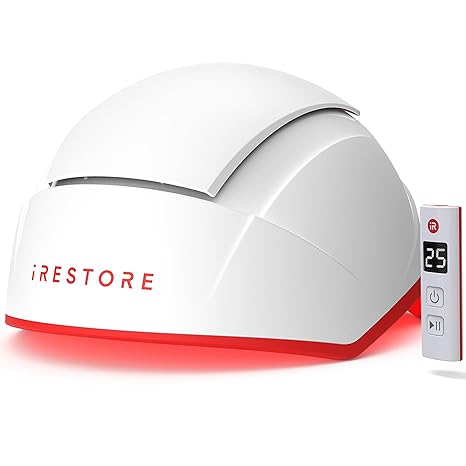

In the global aesthetic and clinical dermatology sectors of 2026, the management of androgenetic alopecia has shifted from strictly chemical interventions (Minoxidil/Finasteride) to integrated photobiomodulation. The iRestore Professional represents the high-density pinnacle of consumer-grade Low-Level Laser Therapy (LLLT). By utilizing a specific wavelength of red light, this system aims to re-energize dormant hair follicles at a mitochondrial level. This intelligence brief deconstructs the technical mechanics, economic procurement strategies, and structural limitations of the iRestore Professional system.
Technical Mechanics: Photobiomodulation and Diode Density
The efficacy of the iRestore Professional is driven by its high-output light matrix, which far exceeds entry-level “comb” or “cap” architectures.
- Dual-Light Matrix: The device utilizes a combination of 82 medical-grade lasers and 200 red light LEDs (totaling 282 diodes). While the lasers provide deep penetration into the scalp to reach the follicle bulb, the LEDs provide a broader, consistent field of coverage for the surrounding tissue.
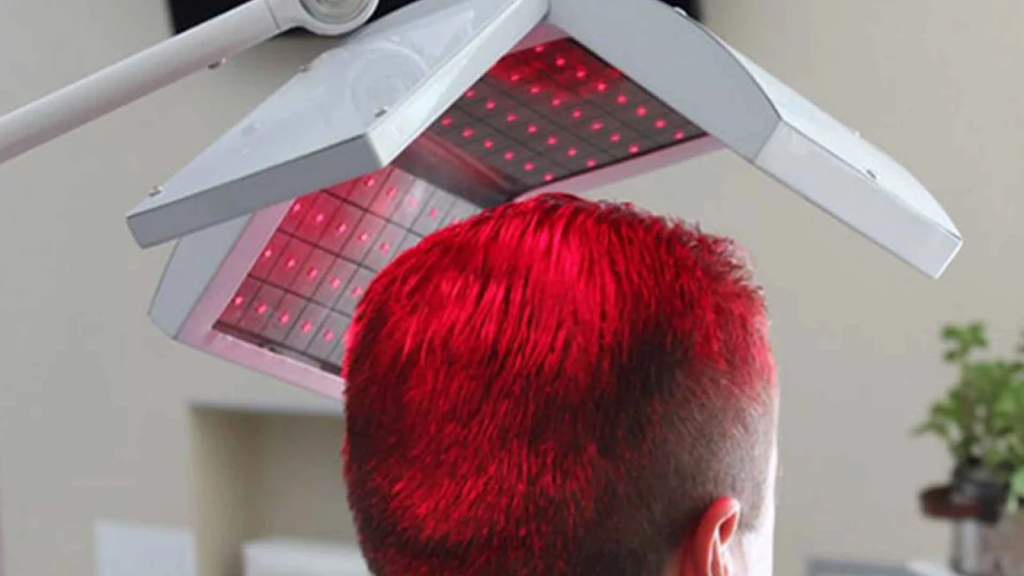
- Wavelength Optimization: The system operates at a wavelength of 650nm. This specific red light spectrum is engineered to stimulate adenosine triphosphate (ATP) production in the cells, extending the Anagen phase (growth phase) of the hair cycle.
- Ergonomic Coverage: Unlike the iRestore Essential model, which focuses primarily on the crown and forehead, the Professional model’s structure extends to the temporal and occipital regions, providing 360-degree scalp saturation.
Economic Impact and Procurement Logistics
From a financial perspective, the iRestore Professional is a high-CAPEX (Capital Expenditure) asset designed to replace or augment recurring clinical laser sessions.
- Capital Efficiency: While the upfront cost is significant (approximately $1,100 to $1,300 in 2026), it serves as a one-time purchase that eliminates the need for expensive in-office LLLT treatments, which typically cost $3,000+ for a full course.
- FDA Clearance and Insurance: This device is FDA-cleared for both men and women. In some 2026 health-savings accounts (HSA) and flexible-spending accounts (FSA) within the US and international markets, this device may be eligible for tax-advantaged procurement if prescribed for medical alopecia.
- Secondary Market Value: Due to the long lifecycle of medical-grade diodes, these devices maintain high resale value on professional refurbishment platforms, provided the unit is maintained and cleaned according to protocol.
Structural Vulnerabilities and Strategic Limitations
Despite the advanced technical matrix, users must account for specific biological and operational bottlenecks.
- The Anagen Lag: LLLT is not an instant solution. Visible results typically require 3 to 6 months of consistent use (25-minute sessions every other day). Users often abandon the protocol during the “shedding phase,” a temporary biological reaction where weak hairs are pushed out to make room for new growth.
- Skin Tone Constraints: The efficacy of light-based therapy is influenced by the Fitzpatrick scale. High melanin concentrations in darker skin tones can absorb more light at the surface, potentially reducing the depth of laser penetration to the follicle compared to lighter skin tones.
- Hardware Sensitivity: The 282-diode matrix is sensitive to heat and physical impact. Frequent dropping or failure to use the specialized power adapter can lead to diode burnout, which significantly reduces the uniformity of the scalp treatment.
Conclusion
The strategic verdict for 2026 is that the iRestore Professional is a premier investment for those seeking to arrest hair thinning without exclusively relying on pharmaceuticals. It provides the highest diode density in the home-use market, ensuring maximum scalp coverage. However, it is a long-term commitment asset; it requires disciplined adherence to the 25-minute alternate-day protocol and should be integrated with a holistic scalp health strategy for optimal ROI.