

Female hair loss affects nearly one-third of women at some point in their lives. While historically overlooked, 2026 brings more specialized, evidence-based solutions than ever before. Minoxidil remains the only FDA-approved medication for female pattern hair loss, proven to shift follicles into an active growth phase and increase hair density.
- Quick Look: Top 6 Minoxidil Brands for Women 2026
- Understanding Female Pattern Hair Loss (FPHL)
- Deep Dive: The Best Brands for 2026
- #1 Best Overall: Ulo Women’s Rx Minoxidil (7%)
- #2 Best for Strength: Musely “The Hair Topical” (8%)
- #3 Best for Sensitivity: Rogaine Women’s Foam
- The Regrowth Timeline: What to Expect
- Safety and Best Practices
- Essential Resources for Your Journey
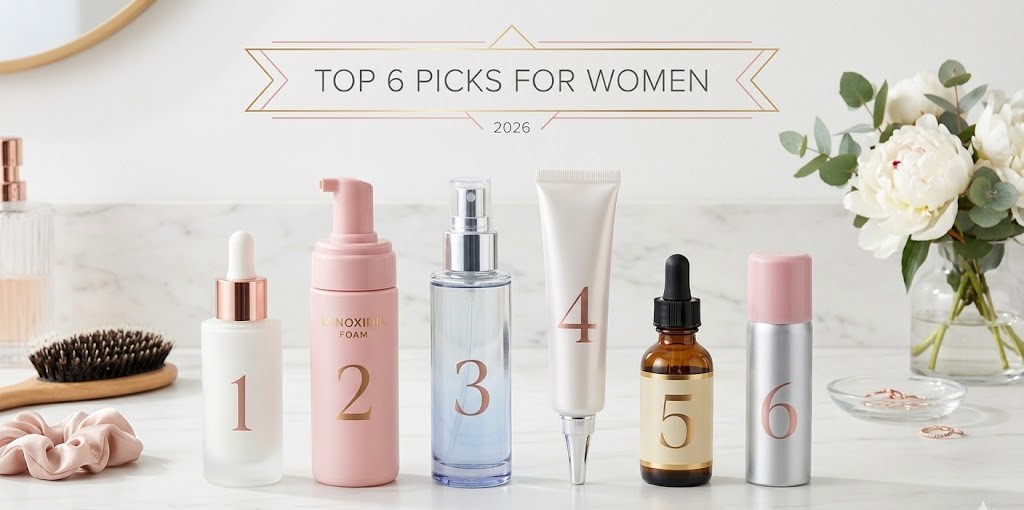
Quick Look: Top 6 Minoxidil Brands for Women 2026
| Category | Product | Strength | Format | Price (Approx.) |
| Best Overall | Ulo Women’s Rx | 7% | Solution | $41.65 |
| Best Strength | Musely Classic | 8% | Solution | $99.00 |
| Sensitivity | Rogaine Foam | 5% | Foam | $49.97 |
| Best Value | Hers | 2% – 5% | Foam/Sol. | $30.00 |
| Alternative | Happy Head | 6% | Solution | $79.00 |
| Woman-Centered | Winona | 7% | Solution | $150.00 |
Understanding Female Pattern Hair Loss (FPHL)
FPHL is a chronic condition where genetically susceptible follicles progressively miniaturize. Unlike men, women typically experience diffuse thinning over the crown and a widening of the “midline part” rather than a receding hairline.
- Ludwig Scale: Grades loss from Class I (mild) to Class III (advanced).
- The Role of Hormones: FPHL is often accelerated during menopause or PCOS, as the balance between estrogen and androgens shifts.
Deep Dive: The Best Brands for 2026
#1 Best Overall: Ulo Women’s Rx Minoxidil (7%)
Ulo takes the top spot for its high-performance, prescription-only approach. It offers a 7% concentration—higher than standard OTC options—and includes add-ons like tretinoin (to boost absorption) and melatonin (to fight oxidative stress).
- Pros: Clinically guided; irritant-free; includes ongoing medical monitoring.
- Cons: Prescription-only; only available in the USA.
#2 Best for Strength: Musely “The Hair Topical” (8%)
For those with advanced thinning who haven’t seen results with standard 2% or 5% formulas, Musely offers a potent 8% minoxidil blend.
- Pros: Highly potent; includes optional dutasteride or spironolactone.
- Cons: Contains corticosteroids (risk of skin thinning if used long-term); ethyl alcohol base can be drying.
#3 Best for Sensitivity: Rogaine Women’s Foam
Rogaine’s 5% foam is the industry standard for sensitive scalps. By eliminating propylene glycol, it avoids the most common cause of minoxidil-related itching and flaking.
- Pros: Once-daily application; fast-drying; widely available.
- Cons: No customization or medical follow-up.
The Regrowth Timeline: What to Expect
Patience is the most critical ingredient. Minoxidil alters the hair cycle gradually.
- Months 0-3 (The “Dread Shed”): An initial increase in shedding is actually a good sign—it means old, resting hairs are being pushed out to make room for new, stronger growth.
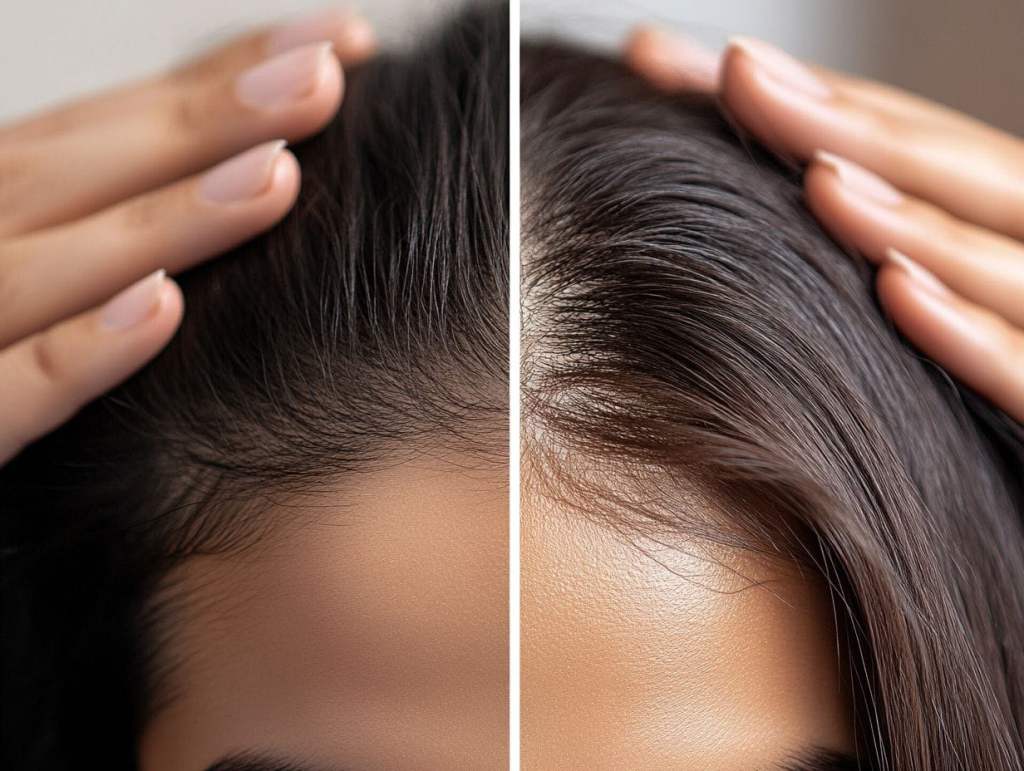
- Months 3-6 (Early Progress): Reduced shedding and the appearance of fine “peach fuzz” (vellus hairs) along the part line.
- Months 6-12 (Peak Results): Noticeable thickening of existing strands and improved scalp coverage.
- Months 12+ (Maintenance): Gains plateau; continued use is required to maintain the density achieved.
Safety and Best Practices
Topical minoxidil is generally very safe, but consistency is key.
- Vehicle Choice: If you have a sensitive scalp, choose Foam (propylene-glycol-free) over Liquid.
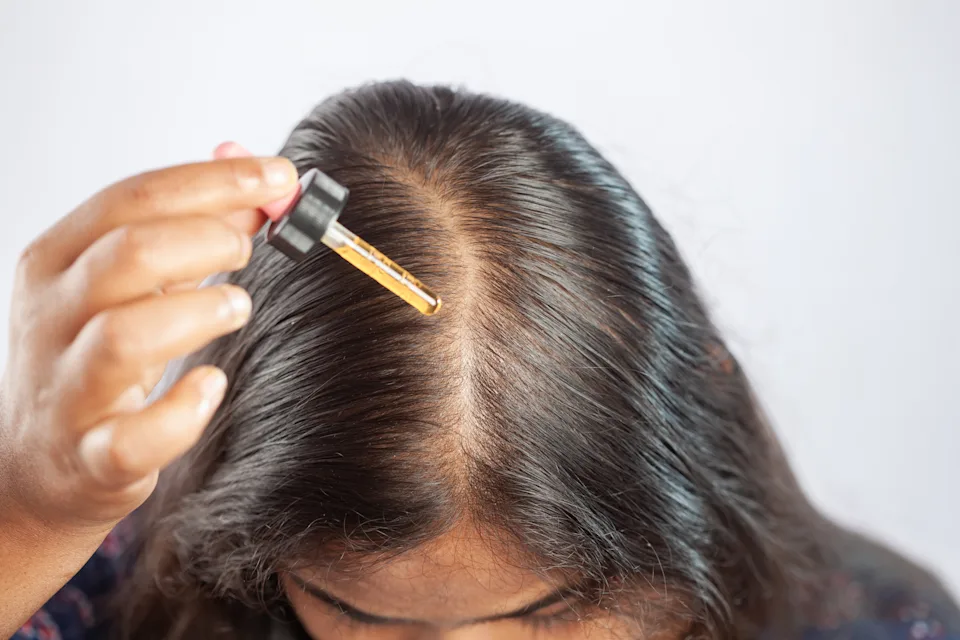
- Application: Use a dropper for precision on the part line or a spray for broad coverage.
- Pregnancy/Nursing: Minoxidil is generally not recommended during pregnancy or breastfeeding. Always consult a doctor first.
Essential Resources for Your Journey
- FDA: Hair Loss Information: Official safety guidelines on approved hair growth medications.
- NIH: Minoxidil in Dermatology: A comprehensive review of minoxidil’s physiological effects on women.
- American Academy of Dermatology (AAD): Visual guides and expert advice for identifying FPHL.
- Ulo Health: Personalized Solutions: A platform for obtaining high-strength, customized hair regrowth prescriptions.
- World Health Organization (WHO) Guidelines: Broad lifestyle advice that complements hair health, including iron and nutrient intake.
Also Read : How to Speed Up Hair Growth: A 10-Step Guide That Actually Works