



Male pattern baldness (androgenic alopecia) is the most common type of hair loss in men. It typically begins in the early 30s, though many notice changes as early as their late teens or early 20s. This condition follows a predictable pattern — from hairline recession to thinning at the crown — and is measured using the seven-stage Hamilton-Norwood scale. While it cannot be completely prevented, effective treatments can slow down, stop, or even reverse hair loss.
- What Is Male Pattern Baldness?
- Stages of Male Pattern Baldness (Hamilton-Norwood Scale)
- Who Is Affected by Male Pattern Baldness?
- Is Male Pattern Baldness Inherited from the Mother’s Side?
- How Common Is Male Pattern Baldness?
- How Male Pattern Baldness Affects the Body
- 1. Medications
- 2. Hair Transplant Surgery
- 3. Platelet-Rich Plasma (PRP)
- 4. Styling Solutions
What Is Male Pattern Baldness?
Male pattern baldness is a hereditary condition where hair on the scalp gradually becomes thinner, leading to permanent hair loss. It often starts with a receding hairline or thinning at the crown, eventually forming an “M,” “U,” or fully bald pattern depending on the stage.
Stages of Male Pattern Baldness (Hamilton-Norwood Scale)
- Stage 1: No visible hair loss or minor thinning.
- Stage 2: Early recession around the temples.
- Stage 3: Deep hairline recession — the classic “M” or “U” shape.
- Stage 4: Significant recession and a bald patch at the crown.
- Stage 5: Hairline recession meets the crown bald spot.
- Stage 6: Only thin hair remains between crown and temples.
- Stage 7: Complete baldness on top with only a thin band of hair on the sides.
Who Is Affected by Male Pattern Baldness?
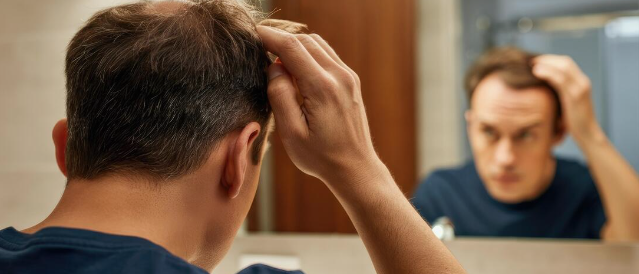
Male pattern baldness can affect men of all backgrounds, but prevalence varies:
- Most common in men of White/Caucasian descent.
- Moderate likelihood in Afro-Caribbean men.
- Less common in Chinese and Japanese men.
- Rare in Native American and Alaska Native populations.
If your father, grandfather, or brothers are bald, your risk increases significantly.
Is Male Pattern Baldness Inherited from the Mother’s Side?
While many believe the baldness gene comes only from the mother, research shows that male pattern baldness is linked to both sides:
- If your maternal grandfather is bald, your risk increases.
- If your father is bald, you are twice as likely to develop male pattern baldness.
How Common Is Male Pattern Baldness?
- 25% of men notice the first signs before age 21.
- 50% experience noticeable hair loss by age 50.
- 70% will have significant hair loss eventually.
How Male Pattern Baldness Affects the Body
Male pattern baldness occurs when hair follicles shrink over time:
- Hairs become thinner and shorter
- Growth phases become shorter
- Eventually, hair stops growing completely
Although it doesn’t affect physical health, it may cause emotional stress, anxiety, depression, or self-esteem issues.
Symptoms of Male Pattern Baldness
Common signs include:
- Thinning hair on the crown
- Receding hairline at the temples
- “M-shaped” pattern formation
- A bald spot on the crown
- Gradual progression over years
Hair loss is painless but often becomes noticeable in photos, mirrors, or during grooming.
Causes of Male Pattern Baldness
The main factors include:
1. Age
Hair follicles naturally shrink with age, increasing hair loss.
2. Hormones (DHT)
DHT — a form of testosterone — shortens the hair growth cycle and shrinks follicles.
3. Genetics
The AR gene determines how sensitive your follicles are to DHT. High sensitivity leads to faster progression of male pattern baldness.
Male pattern baldness is NOT contagious.
Diagnosis of Male Pattern Baldness
A healthcare provider can diagnose male pattern baldness through:
- Physical examination of the scalp
- Family history assessment
- Hairline and pattern evaluation
- Densitometer testing for follicle thickness
Additional tests may be done if hair loss doesn’t match the typical pattern:
- Scalp biopsy
- Hair analysis
- Blood tests to detect thyroid disorders, nutritional deficiencies, or autoimmune conditions
Treatment Options for Male Pattern Baldness
1. Medications
Minoxidil (Rogaine®) – OTC
- Applied directly to the scalp
- Promotes regrowth and slows thinning
- Results may take 2–4 months
Side effects: Scalp irritation, unwanted facial hair growth.
Finasteride (Propecia®) – Prescription
- Oral medication
- Lowers DHT levels
- Takes 3+ months to show results
Side effects: Decreased libido, erectile dysfunction, allergic reactions.
2. Hair Transplant Surgery
Follicles from hair-dense areas are transplanted to thinning areas.
Recovery:
- Minimum 3 weeks
- Full results in 9–12 months
- Multiple procedures may be needed
3. Platelet-Rich Plasma (PRP)
Your blood is processed and injected into your scalp to stimulate growth.
Recovery:
- About 3 weeks
- Multiple sessions are usually needed
4. Styling Solutions
- Strategic hairstyles
- Wigs or hair systems
- Hair fibers to conceal thinning the appearance
What to Expect with Male Pattern Baldness
Some men accept male pattern baldness as part of aging, while others choose treatment to maintain or restore hair. Early treatment offers better long-term results.
Can Male Pattern Baldness Be Prevented?
There is no proven way to prevent male pattern baldness. However, you can support healthier hair growth by:
- Eating a protein-rich diet (40–60g/day)
- Following a Mediterranean-style diet
- Ensuring adequate vitamin intake (A, B, C, D, E, Zinc, Iron)
- Managing stress through exercise, meditation, or therapy
These habits may slow down the progression of male pattern baldness.
When Should You See a Doctor?
Seek medical advice if:
- You want to preserve your hair
- You notice sudden or patchy hair loss
- You are unsure if it is male pattern baldness
- Hair loss is affecting your mental health
Questions to Ask Your Doctor
- Do I definitely have male pattern baldness?
- What stage am I currently in?
- Which treatment is best for me?
- What side effects should I expect?
- Should I see a dermatologist or hair specialist?
Male Pattern Baldness vs. Telogen Effluvium
Telogen Effluvium
- Sudden, temporary hair shedding
- Triggered by stress, illness, surgery, or hormones
- Hair regrows once the trigger is removed
Male Pattern Baldness
- Slow, progressive hair loss
- Permanent without treatment
- Caused by genetics + DHT
Conclusion
Male pattern baldness is a common and natural part of aging for many men. While it may impact confidence or mental well-being, many effective treatments — from medications to hair transplant surgery — can help slow or reverse hair loss. Seeking medical advice early ensures better outcomes and helps you choose the right treatment for your stage of male pattern baldness.