

In the modern health and wellness landscape, biotin has firmly established itself as a superstar ingredient for cultivating and preserving luscious locks. But does this nutrient truly hold the secret to thicker tresses, or is it merely another industry trend? Let us explore the biological mechanisms of this vital nutrient, its true impact on your scalp, and the best dietary sources to naturally defend against deficiency.
What Is Biotin?
Biotin, frequently referred to as vitamin B7 or vitamin H, is a crucial water-soluble vitamin that plays a mandatory role in the body’s metabolic functions. As an active member of the B-complex family, it is responsible for converting the food you eat into usable energy while simultaneously fostering the cellular growth required for strong nails and resilient hair.
Why Biotin Matters For Hair?
The primary reason this vitamin is heavily linked to hair care is its role in protein synthesis. Specifically, it stimulates the production of keratin, the foundational structural protein that gives your hair its bounce, elasticity, and brilliant luster. When your body lacks this essential nutrient, hair strands can become chronically dry and brittle, occasionally leading to noticeable shedding and thinning.
What Are The Symptoms Of Biotin Deficiency For Hair?
Biotin, being a water-soluble vitamin, cannot be stored in our bodies. However, biotin can be obtained in substantial amounts from common dietary sources, reducing the likelihood of biotin deficiency. Even so, people with certain health conditions or on certain medications may be at risk of developing biotin deficiency. Another cause of biotin deficiency is often a rare genetic condition called Biotinidase Deficiency (BTD). A congenital condition, BTD affects the body’s ability to use biotin, leading to its deficiency.
Symptoms of biotin deficiency can range from hair thinning to gradual loss of hair in more severe cases. Some of the most common symptoms of biotin deficiency for hair include:
- Thinning Hair
Since biotin helps in keratin production, its deficiency can lead to weakening and thinning of hair strands, leading to reduced volume and overall hair thickness.
- Brittle Texture
Reduced keratin synthesis due to biotin deficiency can cause the hair to develop split ends, become fragile, and break easily.
- Alopecia
If the deficiency is severe and longstanding, it can progress to hair loss or alopecia. A study found that 38% of women who reported hair loss were deficient in hair loss [3] . This could be linked to the progressive weakening of hair shafts due to gradual keratin loss, even though the hair follicles themselves continue to cause hair growth [4] .
- Increased Shedding
Biotin deficiency can cause the skin and hair to become dry, scaly and rough, leading to increased flaking and shedding.
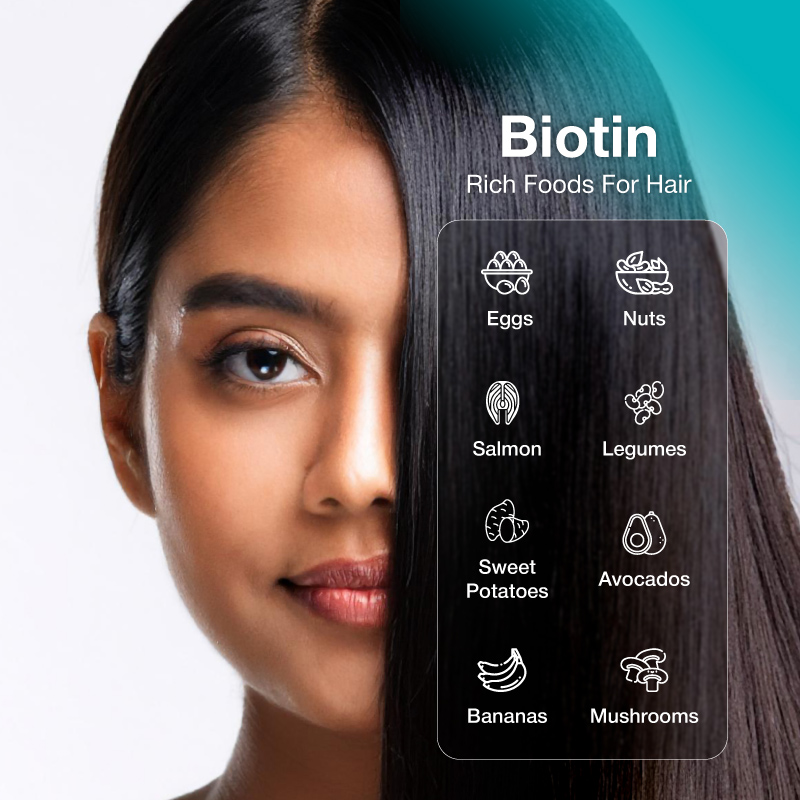
What Are Biotin-Rich Foods for Hair?
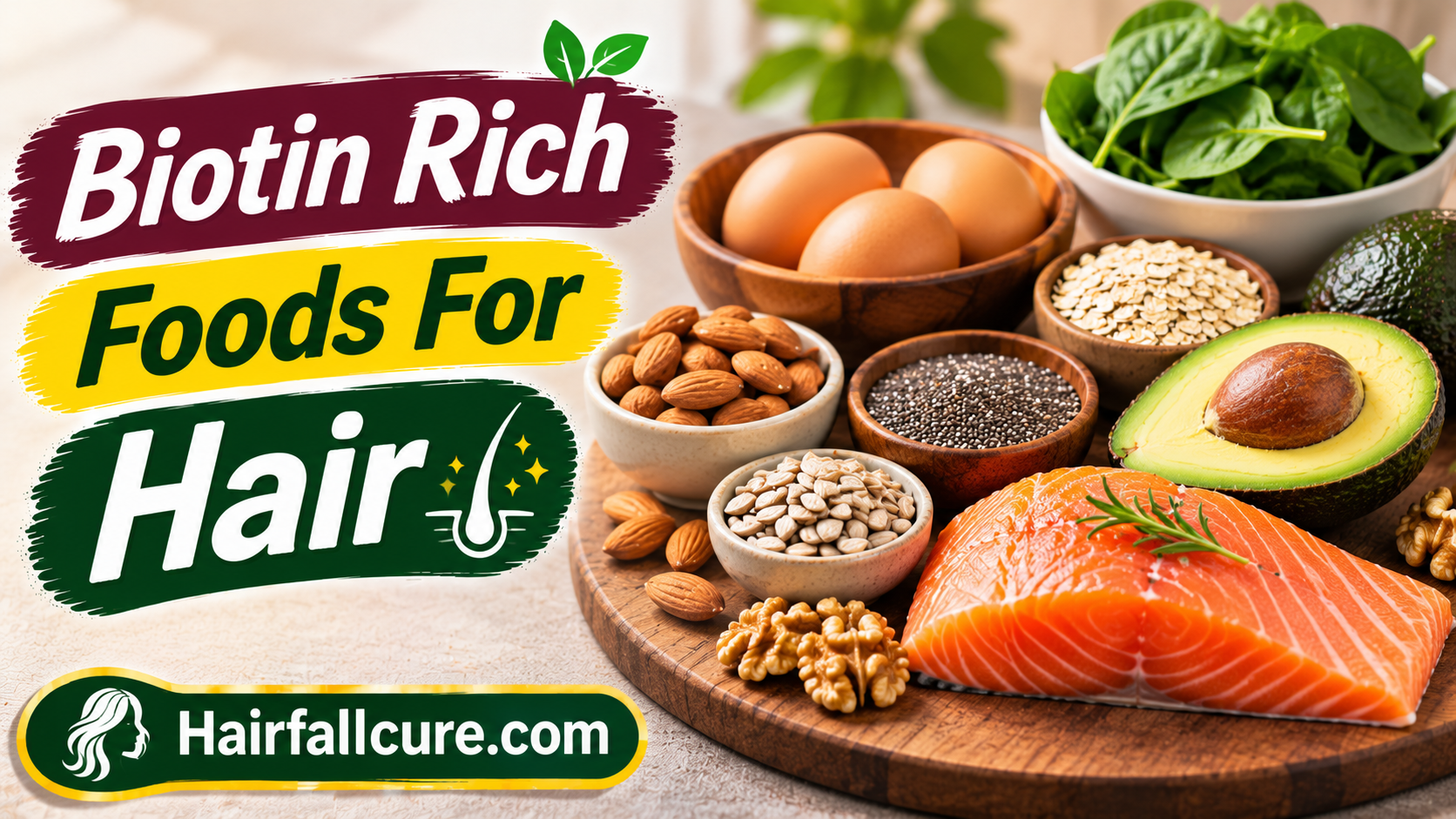
You can easily secure your daily requirements by incorporating a variety of both plant and animal-based whole foods into your meals. Consider adding these potent sources to your grocery list:
- Eggs: The yolk is an absolute powerhouse for hair health. Packed with albumin, iron, and phosphorus, a single whole cooked egg delivers roughly one-third of your recommended daily target.
- Organ Meats: Liver is uniquely dense in B vitamins. Consuming just 75 grams of cooked beef liver provides nearly 100% of your daily value (DV), making it one of the most concentrated sources available.
- Nuts and Seeds: Perfect for snacking, a modest handful of raw nuts and seeds offers healthy unsaturated fats, fiber, and around 5% of your daily B7 requirement.
- Salmon: This fatty fish is legendary for its cosmetic benefits. Beyond providing a heavy dose of omega-3 fatty acids, an 85-gram serving of pink salmon supplies roughly 17% of your daily biotin needs.
- Sweet Potatoes: Standing out as one of the premier plant-based options, just half a cup of cooked sweet potatoes yields almost 8% of your daily value alongside excellent fiber content.
- Legumes: Lentils, soybeans, peanuts, and peas are vital staples for plant-based proteins. A single ounce of these hearty legumes can satisfy up to 17% of your nutritional requirement.
- Avocados: A standard medium avocado holds about 6% of the daily value. Beauty Tip: Mashing fresh avocado with a dash of olive oil creates a deeply nourishing, topical mask that forces hydration directly into the hair shaft.
- Bananas: While highly prized for their potassium and zinc, a medium banana also provides a modest, steady baseline of 0.2 to 0.4 micrograms of B7.
- Dairy Products: Milk, cheese, and plain yogurt are fantastic dietary additions. A standard serving offers up to 0.4 micrograms, passively supporting ongoing skin, nail, and follicular health.
- Leafy Greens: Spinach, kale, and broccoli bring exceptional value to the table. Not only do they contain trace amounts of vitamin B7, but they are also loaded with folate and iron—two minerals critical for robust hair growth.
- Mushrooms: Fascinatingly, wild and cultivated mushrooms naturally generate this vitamin as a biological defense mechanism against parasites, making them a brilliant addition to salads and stir-fries.
How Much Biotin Do You Need Daily?
The recommended daily intake value of biotin for adults is 30 micrograms. It is usually safe to be consumed in slightly higher amounts during pregnancy and breastfeeding as well, but medical supervision is recommended. In case of specific health conditions or medications, consulting a healthcare advisor is best for proper guidance on dosage and safety.
What Are The Side Effects Of Biotin Deficiency?
A few of the common side effects of biotin deficiency include:
- Dry, itchy, or scaly skin
- Dry eyes
- Dry/cracked corners of the mouth
- Red rashes on the face
- Brittle hair and nails
- Hair loss
- Fatigue
- Insomnia
- Loss of appetite
- Upset stomach
- Muscle pain
- Needle-like sensation in hands and feet
A more serious deficiency of biotin may lead to:
- Depression
- Nausea
- Difficulty in walking
- Seizures
When To Consult Dermatologists?
If you are experiencing excessive scalp dryness, scaling, flaking, or sudden or rapid hair loss, it is best to contact a certified dermatologist for further investigation. Hair thinning, loss of volume, weight changes, and mood fluctuations may all be indicative of severe biotin deficiency, which must be medically addressed. An experienced dermatologist can provide a detailed diagnosis and offer tailored treatment for holistic and long-term solutions. Our expert dermatologists at Oliva offer bespoke and advanced hair treatments. You can book a consultation online for a specialised session.
Takeaway
Biotin is an extremely popular and widely recommended hair supplement. It is a water-soluble B vitamin that is essential for the body to produce energy from food. Several dietary sources can provide sufficient biotin; however, its deficiency can cause symptoms such as hair thinning, breakage, or even alopecia. It is important to check in with a dermatologist if you notice any unusual changes in hair thickness, growth patterns, or overall scalp health for timely support and guidance.