

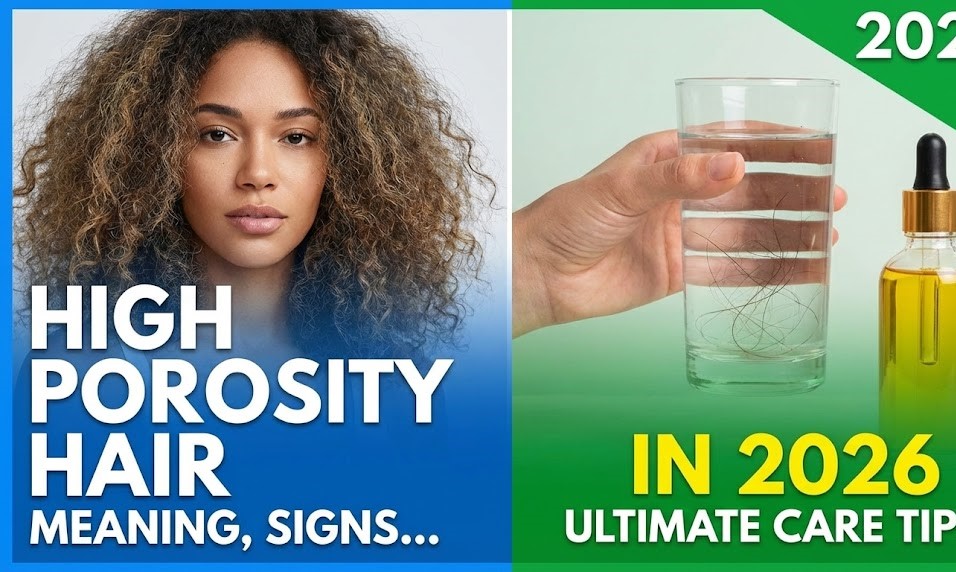

Want to learn more about your hair type? Give this guide a read-through.
Understanding your hair type is the absolute best way to get the most out of your hair care routine. When we talk about hair types, most people only think of “oily” or “dry.” Well, there is much more to the science of hair than just its oil production.
In this blog, we are diving deep into high porosity hair. We will explore what it means, the telltale signs you have it, and exactly how to cultivate a hair care routine that brings your locks back to life.

What Is Hair Porosity?
The porosity of your hair refers to how porous the individual hair strands are. Porosity determines how easily your strands allow moisture, oils, and hair care products to penetrate the shaft beyond its outer layer (the cuticle).
In layman’s terms, porosity simply means how well your hair can absorb and retain liquid.
Generally, there are three levels of hair porosity:
- Low Porosity: There is hardly any gap between the cuticles. The cuticles lay flat and tight, making it very difficult for water or products to penetrate the shaft. Because moisture cannot get in, this type of hair is prone to dryness and product build-up.
- Medium Porosity: This is considered “normal” hair. There is a slight gap between the cuticles, allowing the hair to effortlessly absorb and retain liquid and nutrients.
- High Porosity: There are massive gaps within the hair shaft because the cuticles are wide open and raised. While this hair absorbs moisture instantly, it loses it just as fast. Colored, bleached, or chemically treated hair usually has high porosity because the chemicals damage the protein structure of the strands.
3 Telltale Signs of Highly Porous Hair
Not sure if you fit the bill? Here are three signs you have high porosity hair:
- Instant Wetting and Drying: Water and products enter your hair shaft instantly, but they leave just as quickly. Your hair might air-dry incredibly fast because the open cuticles cannot hold onto the moisture.
- Constant Tangling and Frizz: The open, raised cuticles act like velcro, intertwining with nearby strands and creating a tangled mess. Even though you may moisturize your hair constantly, it still looks unruly, frizzy, and dull.
- Extreme Brittleness: High porosity hair tends to break off easily. It lacks elasticity and looks dry and damaged. As the strands dry, they may shrink upward due to the sheer lack of internal moisture.
The Float Test: Determine Your Hair Porosity at Home
You can check your hair porosity at home using the classic “Float Test.”
Get a glass of room-temperature water. Take a clean strand of your hair (ensure there is no product, conditioner, or oil on it, as this will skew the results) and drop it into the water. Watch how it behaves:
- Floats at the top: Your hair has Low Porosity. The closed cuticles repel the water.
- Sinks to the middle: Your hair has Medium Porosity.
- Sinks straight to the bottom: Your hair absorbs the water instantly and sinks like a stone. You have High Porosity hair.
The Ultimate High Porosity Hair Care Regime
If you have highly porous hair, you must focus on two things: protein to fill the gaps, and heavy moisturizers to seal the cuticles.
Here are the top care tips to revive your hair:
1. Incorporate Protein Treatments
You must use protein treatments to temporarily fill the physical gaps in the damaged hair shaft. Keratin and amino acids help rebuild the structure of the hair.
- Recommendation: Use a weekly hair mask enriched with Milk Protein or Plant Keratin, like the Mamaearth Almond Hair Mask, to coat the strands against further damage.
2. Wash with Butter and Oils
A harsh cleanser will strip the remaining natural oils from your scalp, making high porosity hair even more brittle. Avoid sulfates at all costs.
- Recommendation: Use a gentle, hydrating formulation like the Mamaearth Onion Hair Shampoo, which features Soy Amino Acids to cleanse the scalp without causing structural damage.
3. Use the L.O.C. Method (Leave-in, Oil, Cream)
Because your hair loses moisture rapidly, you need to lock it in layers.
- Apply a hydrating Leave-in conditioner while the hair is damp.
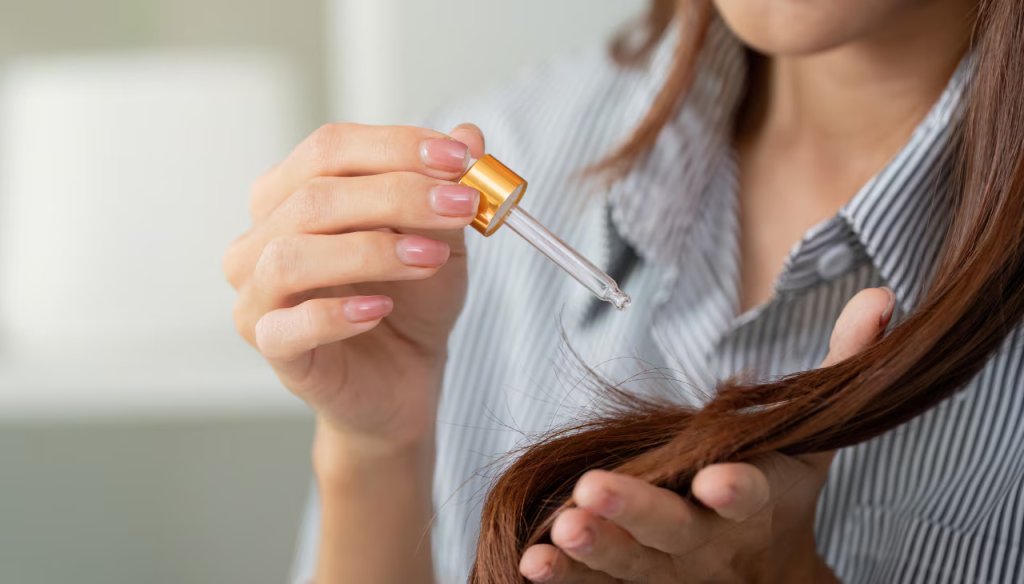
- Follow up with a heavy, sealing Oil (like Castor Oil, Avocado Oil, or Jojoba Oil).
- Finish with a thick styling Cream or Shea Butter to manually close the cuticles and trap the hydration inside.
4. Rinse with Cold Water
Hot water lifts and opens the hair cuticles—which is the exact opposite of what high porosity hair needs! Dermatologists recommend always rinsing your conditioner out with cold water to help lay the cuticles flat and seal in the moisture.
Summary
Having high porosity hair is not necessarily “bad,” but it is highly demanding. You must cultivate a nourishing routine that focuses on hydration retention. Avoid ingredients that strip essential oils (like sulfates and parabens), limit your use of hot styling tools, and lean heavily into thick sealing oils and protein masks. Once you get the hang of your hair’s porosity, managing frizz and breakage becomes incredibly simple!
Also Read : How to Stop Hair Fall Immediately? Effective Home Remedies & Tips .


